Pada tahun 2015, Presiden Jokowi memosisikan kebijakan penanggulangan narkotika ke dalam kerangka perang terhadap narkotika (war on drugs). Institusi keamanan, dalam hal ini BNN dan Polri, menafsirkan narasi keras tersebut dengan gencarnya pengungkapan-pengungkapan kasus narkotika.
Catatan media menyebutkan bahwa sepanjang 3 (tiga) tahun terakhir dimulai pada tahun 2017, BNN mengungkap 46.537 kasus narkotika dan menangkap 58.365 tersangka.1 Pada tahun 2018 terdapat 40.553 kasus yang diungkap Polisi dan BNN yang melibatkan 53.251 tersangka2 , sedangkan pada tahun 2019, BNN, Polri, TNI, Bea Cukai dan Imigrasi merilis sebanyak 33.371 kasus narkotika dan menangkap 42.649 orang.
Selama masa ” peperangan” itu pula, LBHM, Manesty Internasional Indonesia, dan KontraS mencatat adanyanya insiden penembakan dalam penanganan kasus narkotika, sepanjang tahun 2017 terdapat 215 insiden penembakan. Hal ini terjadi dikarenakan pendekatan keamanan yang masih dipakai dalam penanganan kasus narkotika. Dampak lain dari pendekatan keamanan ini ialah Overcrowd penjara di Indonesia, dengan presentasi total penghuni narkotika (Desember, 2019) di penjara sebesar 49,20%.
Munculnya banyak permasalahan dalam penerpaan pendekatan keamanan dalam kasus narkotika, seharusnya membuat pihak keamanan berpikir untuk beralih menggunakan pendekatan yang lebih humanis dalam penanggulangan kasus narkotika.
Permasalahan kematian pada institusi pemasyarakatan agaknya menjadi isu yang tak kunjung selesai dari tahun ke tahun. Sejak 2016, Lembaga Bantuan Hukum Masyarakat (LBHM) telah melakukan monitoring dan dokumentasi media tentang kematian di institusi pemasyarakatan.
Tragedi kematian dalam institusi pemasyarakatan adalah problem yang bersifat repetitif. Pada tahun 2019, terjadi penurunan angka kematian, dari 123 korban (dari 116 kasus) pada tahun 2018 menjadi 66 korban (dari 64 kasus). Penurunan angka kematian tersebut belum tentu menunjukkan perbaikan signifikan pada institusi pemasyarakatan.
Belum lagi kondisi Overkapasitas Penjara di Indonesia yang bukalah situasi yang baik bagi narapidana baik secara sisi kesehatan fisik dan mental, maupun sisi keamanan. Yang akhirnya membuat tragedi kematian di dalam lapas terus ada.
Menurut keterangan Kementerian Hukum dan HAM per 22 April 2020 diketahui bahwa Kementerian Hukum dan HAM telah melakukan pengeluaran dan pembebasan terhadap 38.822 orang Warga Binaan Penjara (WBP) sebagai upaya penanggulangan penyebaran Covid-19 di rutan dan lapas di Indonesia. Kami mengapresiasi kerja pemerintah untuk mencegah penyebaran masif Covid-19 di rutan dan lapas di Indonesia.
Pemerintah juga harus selanjutnya harus mempersiapkan pembebasan terhadap mereka yang termasuk dalam kelompok rentan (para lanjut usia (lansia), ibu hamil atau dengan anak, Anak, WBP dengan penyakit bawaan atau yang sedang dalam kondisi sakit kritis/serius, WBP dengan kondisi gangguan jiwa yang serius, serta pengguna narkotika di dalam rutan dan lapas).
Pandemik Covid-19 seharusnya bisa jadi momentum bagi Pemerintah untuk memperbaiki kebijakan narkotika yang masih menggunakan penghukuman, dan menjadikan narapidan narkotika sebagai penyumbang overcrowd di penjara terbesar. Per Maret 2020 jumlah penghuni rutan dan lapas di Indonesia mencapai 270.466 orang. Padahal, kapasitas rutan dan lapas hanya dapat menampung 132.335 orang–55% WBP berasal dari tindak pidana narkotika, yakni 38.995 orang.
Salah satu yang harus dilakukan Pemerintah adalah melakukan assessment atau penilaian kesehatan termasuk penilaian derajat keparahan penggunaan napza dan resiko yang akuntabel dan komprehensif, termasuk penilaian adiksi dan risiko pada semua WBP yang berasal dari kebijakan “rancu” narkotika. Dalam hal ini, banyak pengguna dan pecandu narkotika dijerat dengan pasal penguasaan dan kepemilikan UU Narkotika yang menyebabkan mereka diklasifikasikan sebagai “bandar” dan dijatuhi hukuman di atas 5 tahun penjara.
Lalu apalagi yang harus dilakukan Pemerintah? Simak rilis lengkapnya di sini
Rilis bersama oleh ICJR, IJRS, LBH Masyarakat (LBHM), MaPPI FHUI, Rumah Cemara dan Yakeba
Informasi dari rapat paripurna DPR 2 April 2020 yang digelar terbuka mengejutkan masyarakat sipil. Hal itu sehubungan dengan kabar bahwa RKUHP akan segera disahkan. Padahal sampai saat ini saja, tata tertib DPR tentang tindak lanjut dari Surat Presiden terkait carry over belum diketahui kejelasannya oleh masyarakat luas. Berita tentang rencana DPR mengesahkan RKUHP dalam sepekan di masa darurat Covid-19 ini akan menambah catatan buruk DPR dan Pemerintah. Sikap terburu-buru yang dilakukan oleh Pemerintah dan DPR saat ini menunjukkan aji mumpung di kala pandemic Covid-19 sedang berlangsung. Langkah tersebut jelas tidak menunjukkan niat baik Pemerintah maupun DPR untuk serius mengedepankan kesehatan warga negaranya.
Tidak hanya RKUHP yang kualitas substansinya akan dikesampingkan jika disahkan saat pandemi berlangsung. Namun ada beberapa RUU lain yang juga akan menjadi polemik, seperti RUU Ketahanan keluarga dan Omnibus Law RUU Cipta Lapangan Kerja. Besar kemungkinan bahwa beberapa RUU tersebut diatas akan mengandung ketentuan yang tidak relevan bagi konteks sosial masyarakat Indonesia kedepan. Selain itu, masih banyak masalah yang timbul dari pasal-pasal yang seharusnya dibahas lebih dalam dan menyeluruh, terutama terkait dengan perempuan dan kelompok marjinal.
Untuk membaca rilis lengkapnya teman-teman dapat mengunduhnya di sini
LBH Masyarakat (LBHM) bersama dengan dua lembaga lainnya yakni Institue Criminal for Justice Reformr (ICJR) dan Harm Reduction International (HRI) menyambut resolusi 42/22 dari Dewan Hak Asasi Manusia yang memperbaharui mandat Kelompok Kerja untuk Penahanan Sewenang-wenang (WGAD); dan meminta Kelompok Kerja ini untuk menyiapkan dan menyajikan laporan tentang penahanan sewenang-wenang terkait kebijakan narkotika.
Pengajuan berikut ini memberikan informasi tentang penahanan dalam konteks kebijakan narkotika di Singapura Indonesia, mengikuti struktur kuesioner yang diedarkan oleh WGAD pada 4 Februari 2020.
Diketahui Polda Metro Jaya menangkap 18 orang di Jakarta
Pusat pada Jumat malam 3 April 2010. Menurut keterangan Kabid Humas Polda Metro
Jaya mereka diduga melanggar pembatasan sosial berskala besar (PSBB) Pasal 93
Undang-undang Nomor 6 Tahun 2018 tentang Kekarantinaan Kesehatan dan/atau Pasal
218 KUHP. Terhadap ke-18 orang tersebut dilakukan penangkapan. Dalam
keterangannya di pemberitaan, pihak humas polda metro jaya menyatakan “Ketika
PP-nya telah resmi dikeluarkan oleh pemerintah, maka pihak kepolisian
sebagaimana amanat bapak Presiden tidak boleh ragu, harus tegas melakukan
tindakan upaya penegakan hukum.”
Hal ini tidak berdasar hukum. Apa yang dilakukan oleh pihak kepolisian dengan melakukan penangkapan adalah tindakan sewenang-wenang karena belum ada ketentuan pidana yang dapat diterapkan.
Koalisi Masyarakat Sipil menilai jika ada pelanggaran hukum yang dilakukan oleh aparat penegak hukum serta ketidakjelasan Pemerintah terkait status PSBB.
Teman-teman dapat melihat rilis lengkapnya di sini
LBH Masyarakat (LBHM) bersama Harm Reduction International, Canadian HIV/AIDS Legal Network, Eurasian Harm Reduction Association (EHRA), International Drug Policy Consortium (IDPC), International Network of People who use Drugs (INPUD), Release, dan Rights Reporter Foundation, membuat pernyataan sikap bersama melalui Special Rapporteur dan prosedur khusus lainnya tentang adopsi tindakan darurat untuk menanggapi pandemi COVID-19, dan juga mendorong negara-negara tetap mempertahankan penggunaan pendekatan HAM dalam mengatur pandemik ini.
Darurat Covid-19 ini menunjukkan permasalahan yang belum pernah terjadi sebelumnya, terciptanya kerentanan dan memperburuk keadaan yang sudah ada. Salah satunya orang yang menggunakan narkotika yang terdampak dan menghadapi risiko baru seperti kriminalisasi, stigma, permasalahan kesehatan, pengucilan sosial, serta kerentanan ekonomi dan sosial yang lebih tinggi, termasuk kurangnya akses ke perumahan dan layanan kesehatan yang memadai.
Jika hal ini dibiarkan saja tanpa ada penanganan yang baik dan serius, tentunya akan menimbulkan dampak buruk bagi kelompok rentan. Maka dari itu, berdasarkan bukti yang ada, kelompok rentan harus menjadi prioritas dalam respon darurat untuk mengurangi penyebaran pandemik.
Rekomendasi dari Laporan Khusus ini dapat dilihat
di sini.
Pada tanggal 30 Maret dalam pernyataannya yang tersebar luas Presiden Joko Widodo menyebut Pembatasan Sosial Berskala Luas perlu didampingi adanya kebijakan Darurat Sipil untuk mengatasi Covid-19. Atas pernyataan tersebut kami menyatakan bahwa Darurat Sipil adalah langkah yang salah untuk menangani pandemik Covid-19 yang merupakan masalah kesehatan masyarakat.
Beberapa kalangan menilai penetapan Darurat Sipil ini tidak mempunyai dasar hukum yang kuat, padahal Pemerintah lebih baik menetapkan Darurat Kesehatan Masyarakat ketimbang Darurat Sipil yang dapat membahayakan keamanan dan kesehatan masyarakat.
Darurat sipil juga memberikan peluang besar aparat keamanan untuk melakukan tindak represif kepada masyarakat yang tentunya dapat menyebabkan pelanggaran HAM.
Sehubungan dengan status Covid-19 di Indonesia yang per 29 Maret 2020, 14:45 WIB, telah terdapat 102 orang meninggal dunia, dan 1.1155 orang terinfeksi (rasio mortalitas 8,8%), dan Pemerintah memiliki rencana sebagaimana disampaikan oleh Menteri Koordinator Politik, Hukum, Keamanan, Mahfud MD, jika Pemerintah sedang mempersiapkan Peraturan Pemerintah tentang Karantina Wilayah.
Indonesia sebenarnya sudah mempunyai Undang-Undang (UU) Nomor 6 Tahun 2018 tentang Kekarantinaan Kesehatan. Berdasarkan Pasal 53 ayat (1) juncto Pasal 49 ayat (3), Karantina Wilayah (KW) merupakan bagian respons dari Kedaruratan Kesehatan Masyarakat (KKM), yang ditetapkan oleh Menteri – dalam hal ini Menteri Kesehatan. Di pasal yang lain, yakni Pasal 10 ayat 1, status Kedaruratan Kesehatan Masyarakat (KKM) ditetapkan dan dicabut oleh Pemerintah Pusat. Namun, hingga 29 Maret 2020, Pemerintah Pusat tidak pernah menetapkan KKM secara terbuka.
Melihat hal ini LBHM mengingatkan pemerintah, jika penetapan KKM yang diikuti oleh penetapan KW, seluruhnya harus sesuai dengan rule of law mengikuti ketentuan hukum yang berlaku, dideklarasikan secara terbuka, agar akuntabel. LBHM juga mendesak pemerintah, salah satu desakannya adalah untuk Mengambil keputusan bukan berdasarkan opini lingkaran Istana, tetapi harus berdasarkan pada pandangan para pakar, berbasis data, beorientasi pada menyelamatkan nyawa manusia, dan menyampaikannya kepada publik secara jujur.
Teman-teman dapat mengunduh rilis pers lengkapnya di sini
The legality of sex work in Indonesia can be described, at best, as murky. Whilst not specifically provided for under the criminal code (other than the attempted criminalisation of pimps under Article 296 and Article 506), penal provisions regarding crimes against morality and decency have been interpreted to extend to workers in this industry. Thus, there is a vacuum for sex work to be practiced, despite the cultural and social stigma blatantly present. Sex work occurs in numerous places around the country, most commonly in brothel complexes, or lokalisasi. Recently, members from LBH Masyarakat, a leading human rights organization in Indonesia, went to East Jakarta to meet with sex workers in one such location.
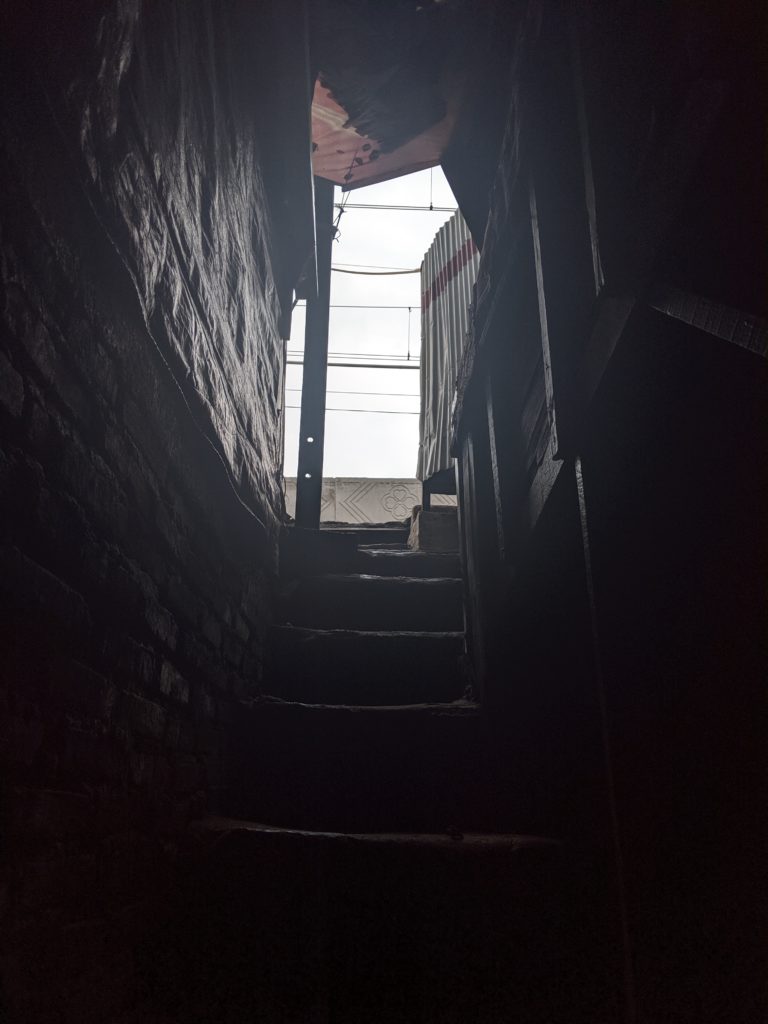
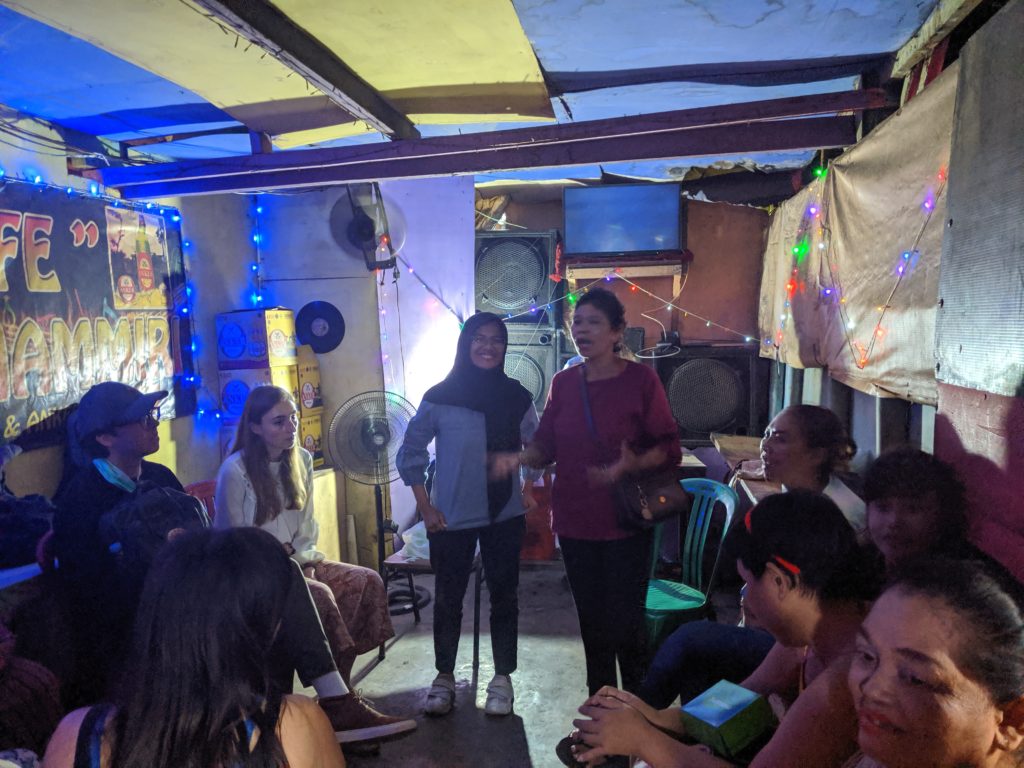
The journey began by talking with the local preman, who is paid 5,000 rupiahs ($.37) per worker per day for “protection”. This was followed by a walk along the train tracks until we stumbled upon the lokalisasi dug out of the earth. Upon descending a makeshift stairwell, we entered into a waiting room that also served as a bar and lounge, surprisingly clean considering its location. Almost as if the rumble of the train overhead was a cue, then entered the women whom we were there with to converse. The purpose of our visit was to inform the workers about their health and legal rights, but more importantly, to be informed by them on what it was they wanted, and ultimately what they needed. Perhaps the most striking element present was the sense of community these workers had with one another. There was a warm family dynamic, full of maternal support from the elders, mockery and familial banter among the younger workers (although no single worker was a child or teenager, which is becoming more prevalent in Indonesia), and a sense of solidarity and support all around.
We have to use stairs to go down.
Our trip enlightened us to the realities of the sex work industry, the lives of those affected by the profession, and about Indonesian society as a whole. The stories that we were told covered a myriad of topics, including police brutality. The legal ambiguity of sex work is routinely extorted by the police and it is common knowledge that officials conduct raids on brothels for the purpose of pocketing bail funds. And it is not just the police: politicians also have been witnessed entrapping sex workers. The women recalled stories of abuse and were received with nods and murmurs of affirmation by the others present. All workers could relate to a tale of coercion or harassment. It almost seemed like the women began trying to outdo the vilest story that had previously been told. One woman recounted a time law enforcement officials stomped on her stomach deliberately until she defecated herself. The sole reason for act: enjoyment by the perpetrator. Other horror stories consisted of workers being accosted by law enforcement on the street, sometimes physically harassing them, poking and prodding them with sharp objects until they acquiesced into stripping. This seemed commonplace, and each recount of abuse was told with an evident lack of hope that the practice would change.
Unequipped for the candor of the women in talking about their lives, we made basic inquiries into the number of shifts the women work daily, the number of working days, and how many guests were received. We were informed that every day was a workday, divided into one day and one night shift and that the latter session was preferred as it attracted a larger number of “guests”. The consensus amongst the workers was that three “guests” were commonly received in a day. It was agreed that the most any individual would be paid by a guest was 200,000 rupiahs ($14.65) and that realistically they could receive as little as 10,000 rupiahs ($.73) for their services. Mitigating factors as to their payment could include race, religion, and age. Women of Chinese descent or of a Christian religious affiliation were handicapped with regard to wages. Similarly, older workers tended to make less money than younger ones. For example, a sex worker over the age of 40 receives a maximum of 45,000 rupiahs ($3.29), thus highlighting the desire for “younger” women. Yet when asked what the diverse group needed, almost in unison they answered “condoms”.
Once every three months, a social worker from the health department comes to test the workers for HIV. If a worker is found to be HIV positive, she is usually banished from the lokalisasi. Not only does she become a pariah to the establishment, but without access to proper treatment or medicine, she poses a threat of transmission to others and to society at large.
Our first visit to prostitute place, and We provide legal counseling to sex work.
The universal account from these women is that they had travelled from afar to the big city Jakarta in hope of a better life, most commonly from small towns around Java and Sumatra. Some of the women made the trek themselves, others were delivered by relatives. The underground back alley where we sat was their final destination, clearly so far from their aspirations of a prosperous life.
Friendly, funny, and familial. These are the words we would use to describe the workers we met. All the women were chatty and willing to tell their story with full transparency and openness, juxtaposed to their literally underground and ultimately clandestine place of work. The irony that the government wants nothing to do with this profession publicly, yet secretly use workers in this industry privately, is not lost on us. And although last year was supposed to see the abolishment of localised sex work in Indonesia, it is apparent this profession is not going anywhere.
What can be done to help sex workers in Jakarta and Indonesia? Contraceptives should be priority one. This includes allowing outreach workers to not be harassed when delivering condoms and contraceptives during routine visits to lokalisasis. Not only will contraceptives help curb infectious diseases, such as HIV/AIDS, but also decrease the chance of any unplanned pregnancies. This may seem like common sense, nevertheless, the Indonesian government prohibits family planning services to provide contraceptives to unmarried couples. Moreover, with some police forces in Indonesia going out of their way to confiscate condoms, it is perturbing to think of how inaccessible these contraceptives might be in the near future. Adding to this dire situation is that the Jokowi administration wishes to “update” the penal code, with amendments that include prohibiting sex outside of marriage (although it has been currently halted due to public outcry), and the situation seems even more pessimistic with regard to sex workers in Indonesia.
With condoms selling at an average price of 20,000 rupiahs ($1.46), these items considered essential by the Western world are often too expensive at a local convenience for the average person. Aside from the hefty price tag, Indonesian cultural customs and societal expectations often negate the opportunity for individuals to purchase contraception. Furthermore, only last year the government wanted to prohibit the advertisement of contraceptives, and further criminalise the non-medical sales of condoms, making their future accessibility even more uncertain. This is sharply contrasted with Western countries where sex education and access to health care, especially with regard to contraceptives, are considered the norm.
From a human rights perspective, access to sufficient health care should be considered a priority. As was reported to us, sex workers are often denied proper treatment for their basic needs due to the reputation of their profession. Furthermore, many of the women do not have state or federal identification cards, thus denying them access to government insurance. With such a low daily income, it is impossible for individuals to pay out of pocket for medications that would greatly improve their quality of life.
It is very difficult to escape the issue of morality when discussing sex workers in Indonesia. One can pontificate if the perception of sex workers will change in the near future, or if violence against women in this industry will abate. These questions are hard to answer when from nearly all angles (social, religious, political and economic) there exists a shadow over the women and men who make a living in this industry. For many in Indonesia, sex work is considered a moral offense, and therefore, elicits a negative response from society. It is important to remember that whilst sex workers are considered to be aliens on the fringe of society, in reality, their practice is woven into the lives of the political, the powerful and the pious.
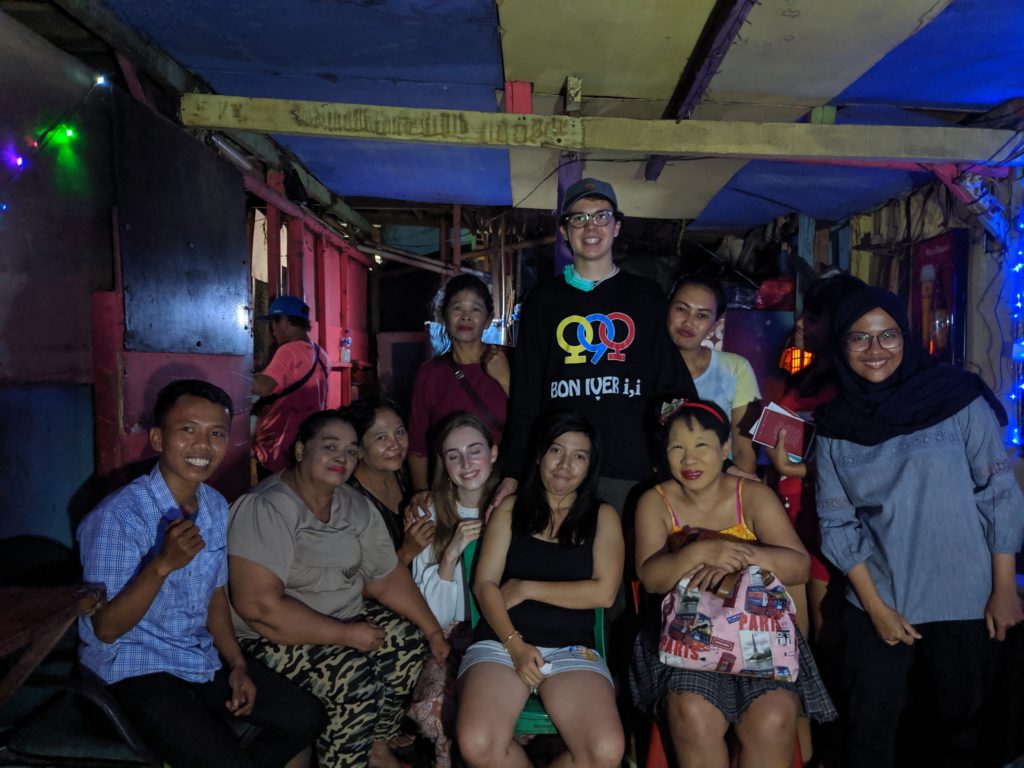
Group photo before we left the prostitute.
Will Doran and Natasha Slater are interns at LBH Masyarakat. Will recently finished his Master’s degree at SOAS, University of London, while Natasha is currently a law student at the University of Adelaide.