Tag: HAYAT

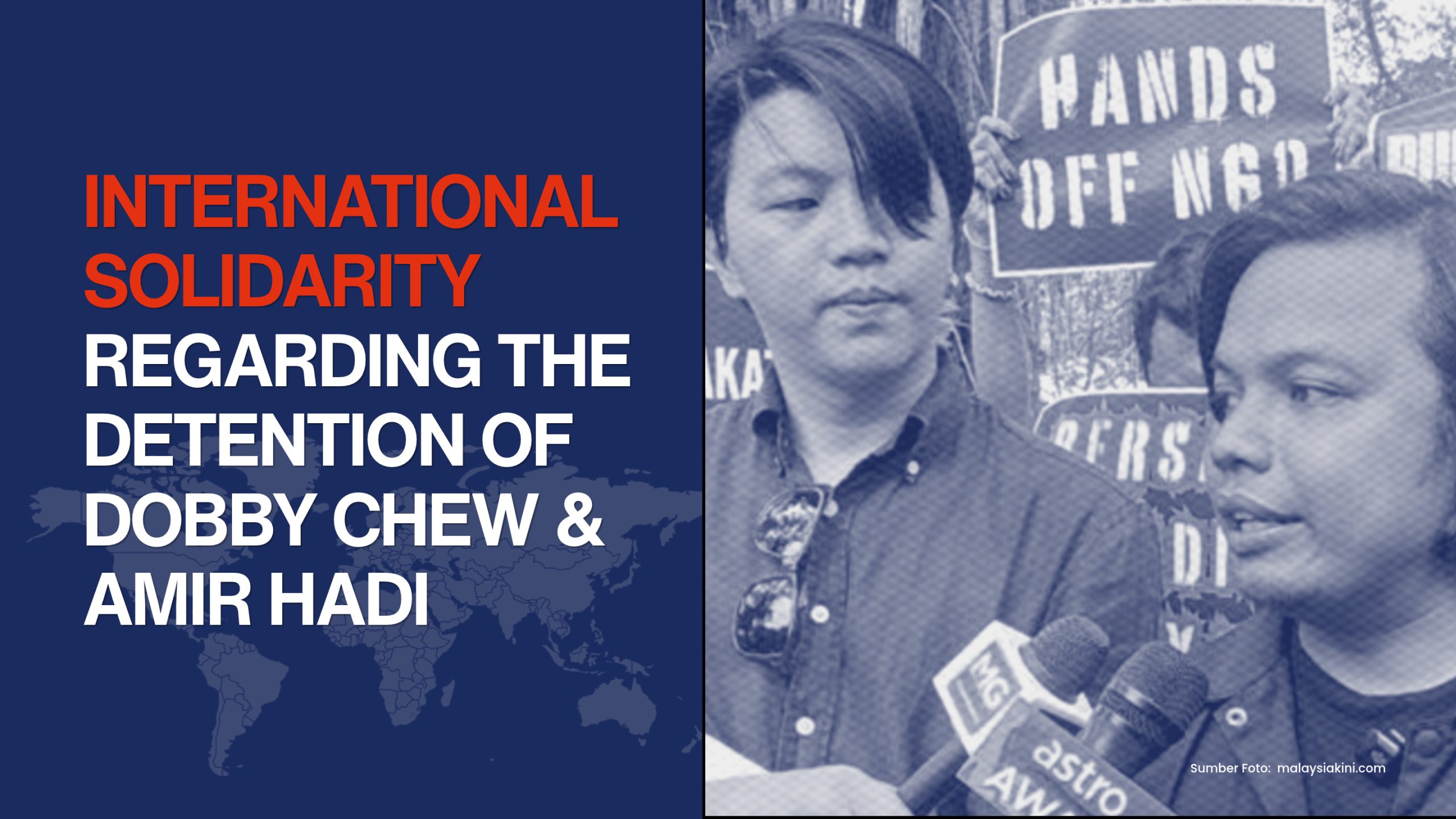
International Solidarity Regarding the Detention of Dobby Chew and Amir Hadi

The undersigned civil society organisations and human rights advocates strongly condemn the detention of Dobby Chew and Amir Hadi, Executive Directors of the organisations HAYAT and MANDIRI. The series of events unfolding since May 2026, leading up to their detention on September 22, 2026, reflects an escalating assault on human rights work and raises grave concerns about the erosion of democratic space and the safety of Human Rights Defenders. Both Dobby Chew and Amir Hadi have been remanded in custody until September 25, 2026.

Chronology of Events

Since May 2026, MANDIRI has been targeted by a series of false and misleading claims circulated on social media by individuals commonly referred to as “cybertroopers.” Many of the videos, which were AI-generated, accused MANDIRI of receiving tens of millions of ringgit in foreign funding to incite hatred towards the current administration under Prime Minister Anwar Ibrahim.

The allegations were subsequently amplified by Muhammad Kamil Abdul Munim, Political Secretary to Prime Minister Anwar Ibrahim, who called for the government to invoke the Anti-Money Laundering, Anti-Terrorism Financing and Proceeds of Unlawful Activities Act (AMLA) to investigate these suspicions.

Since these accusations emerged, the Executive Directors of HAYAT and MANDIRI have consistently denied any misuse of public funds to destabilise the government. Like many civil society organisations, they receive legitimate funding to run programs aimed at advancing human rights, promoting policy reforms and covering essential institutional operational costs. They have also repeatedly expressed their willingness to cooperate fully with law enforcement authorities.

In early September 2026, the Malaysian government imposed a travel ban on Dobby Chew and Amir Hadi, preventing them from leaving the country. Subsequently, on September 10, 2026, the government froze the bank accounts of both MANDIRI and HAYAT, as well as the personal bank accounts of Dobby Chew and Amir Hadi, without formal notice or explanation.

On September 21, 2026, the police officially summoned Dobby Chew and Amir Hadi for questioning the following day. On September 22, both of them appeared for an interrogation process that lasted approximately two hours before they were formally arrested for further investigation under Section 4(1) of AMLA, with no indication of any predicate offences. If convicted under the relevant provisions, both Dobby Chew and Amir Hadi could face a sentence of up to 15 years’ imprisonment and a fine of five times the value of the “unlawful activity” or 5 million ringgit, whichever is higher.

As of September 23, 2026, the latest development is that both Dobby Chew and Amir Hadi have been remanded in custody until September 25, 2026. Their continued detention is deeply concerning and requires urgent attention.

The Work of HAYAT for a rights-based approach to drug policy in Malaysia

To understand the profound implications this accusation can have for drug policy reform in Malaysia, it is essential to look at what HAYAT does. HAYAT is a civil society organisation based in Kuala Lumpur, Malaysia, that advocates for drug policy reform centred on the principle of decarceration, and for the total abolition of the death penalty.

HAYAT provides support and accompaniment to the most vulnerable populations. Malaysia abolished mandatory death sentences in 2023 and initiated resentencing processes for individuals previously condemned to death. However, people deprived of liberty still face deplorable prison conditions post-resentencing, which may lead to serious human rights violations. HAYAT regularly provides paralegal support and conducts welfare checks of people in prison, particularly foreign nationals who have long been estranged from their families.

HAYAT’s accompaniment work has further shed light on the intersection between drug smuggling and human trafficking. HAYAT monitoring indicates drug couriers, many of whom are women, can experience various forms of coercion, threats of violence, or unequal power dynamics that ultimately leave them with little choice but to become involved in narcotics offences. This situation is increasingly recognised by international organisations as a form of human trafficking involving elements of forced criminality — particularly via the adopted CCPCJ Resolution 35/2 alongside the UNTOC TIP working group report published in June 2026.

HAYAT plays a pivotal role in pushing international and regional mechanisms to acknowledge the vulnerabilities of these drug couriers. HAYAT has collaborated with the ASEAN Intergovernmental Commission on Human Rights (AICHR) to develop guidelines for ASEAN member states to ensure the implementation of the principle of non-punishment for drug offenders who are victims of human trafficking, as well as Senior Officials Meeting on Transnational Crime (SOMTC) for the Indicators of Trafficking for Forced Criminality.

HAYAT’s work is vital in driving progressive drug policy reform and serves as a medium to rectify punitive, human rights-violating drug policies prevalent in many Southeast Asian countries. Their work also demonstrates that the death penalty in drug cases is an injustice inflicted upon the most vulnerable.

The freezing of accounts and the detention of HAYAT’s leader have brought crucial case accompaniment work to a standstill, directly disrupting efforts to protect the rights of people affected by punitive drug policies in Malaysia.

Anti-money laundering laws are critical tools for tackling illicit financial flows and serious criminal activity. They must not, however, be instrumentalised to intimidate, criminalise or silence civil society and thereby shrink civic space. The use of AMLA against HAYAT and MANDIRI raises serious concerns that powers intended to address genuine financial crime are instead being  deployed against legitimate human rights work. More broadly, the apparent conflation of legitimate drug policy and human rights work with terrorism and other security threats, including through the application of anti-terrorism and Financial Action Task Force (FATF) standards, risks further shrinking civic space and legitimising the criminalisation of civil society activity. It should be noted that FATF standards require legitimate civil society work to be protected. The Malaysian government must not weaponise counter-terrorism and frameworks to address organised criminal activity to target human rights defenders or organisations working on drug policy and harm reduction.

Joint Demands

In light of the above situation, we urge the Malaysian government to:

  • Immediately release Dobby Chew and Amir Hadi from detention and disclose the predicate offence that warranted their arrest under Section 4(1) of AMLA.
  • Guarantee due process and access to legal counsel, including prompt access to lawyers, information about the allegations and evidence against them, and a fair and transparent judicial process
  • Immediately lift the unlawful freezes on the bank accounts of HAYAT, MANDIRI, Amir Hadi and Dobby Chew, and return all other seized assets.
  • Immediately lift and remove all travel restrictions imposed on Amir Hadi and Dobby Chew, and ensure that they face no ongoing or future administrative, legal or other measures arising from this case that could restrict their freedom of movement.
  • End intimidation and harassment of HAYAT, MANDIRI and other civil society organisations, including online smear campaigns and the dissemination of unsubstantiated allegations by public officials and ensureAnd to make sure that there is a transparent process and a duty to investigate and prosecute, by bringing justice to those found responsible for the violations.
  • Ensure that civil society organisations can receive lawful funding, operate independently, and provide legal, humanitarian, and human rights assistance without fear of criminalisation or retaliation.

Signatories:

  1. AIVL – Australia
  2. Fédération Addiction – France
  3. Forum Akar Rumput Indonesia (FARI) – Indonesia
  4. Forum Droghe – Italy
  5. Fruity by LoveYourself – Philippines
  6. GAATW (Global Alliance against Traffic in Women) – Global
  7. Greater Equitable Measures (GEM) – Malaysia
  8. Harm Reduction International – Global
  9. Health Poverty Action – Global
  10. IMPARSIAL, the Indonesian Human Rights Monitor – Indonesia
  11. Indonesia Judicial Research Society (IJRS) – Indonesia
  12. Iniciativa Negra por uma Nova Política sobre Drogas – Brazil
  13. Institute for Criminal Justice Reform (ICJR) – Indonesia
  14. Instituto RIA, – México
  15. International Coalition for Drug Policy Reform and Environmental Justice – Global
  16. International Drug Policy Consortium (IDPC) – Global
  17. International Network of People who Use Drugs (INPUD) – Global
  18. Inti Muda Indonesia – Indonesia
  19. Jaringan Reformasi Kebijakan Narkotika (JRKN) – Indonesia
  20. Justice Project Pakistan (JPP) – Pakistan
  21. Komisi Untuk Orang Hilang dan Korban Tindak Kekerasan (KontraS) – Indonesia
  22. KUZA TRUST – Kenya
  23. Lawyers Collective – India
  24. Lembaga Bantuan Hukum Masyarakat (LBHM) – Indonesia
  25. MadCollective – Indonesia
  26. Malaysia East Coast Coalition of Activists (MECCA) – Malaysia
  27. id – Indonesia
  28. NoBox – Philippines
  29. Partenariat pour l’Éducation, la Réinsertion et l’Épanouissement Social (PERLE SOCIALE) – Bénin & France
  30. Perkumpulan Rumah Cemara – Indonesia
  31. Pertubuhan Keluarga Kasih – Malaysia
  32. Prévention Information et Lutte contre le SIDA (PILS) – Mauritius
  33. Recovering Nepal, Federation of PUD and Drug Service Organizations – Nepal
  34. Release – UK
  35. Sebaran Kasih – Malaysia
  36. org – US
  37. Students for Sensible Drug Policy International – Global
  38. Transform Drug Policy Foundation – UK
  39. Women and Harm Reduction International Network (WHRIN) – Global
  40. Yayasan Suar Perempuan Lingkar Napza Nusantara (SPINN) – Indonesia
  41. Youth RISE – Global
  42. Zimbabwe Civil Liberties and Drug Network – Zimbabwe
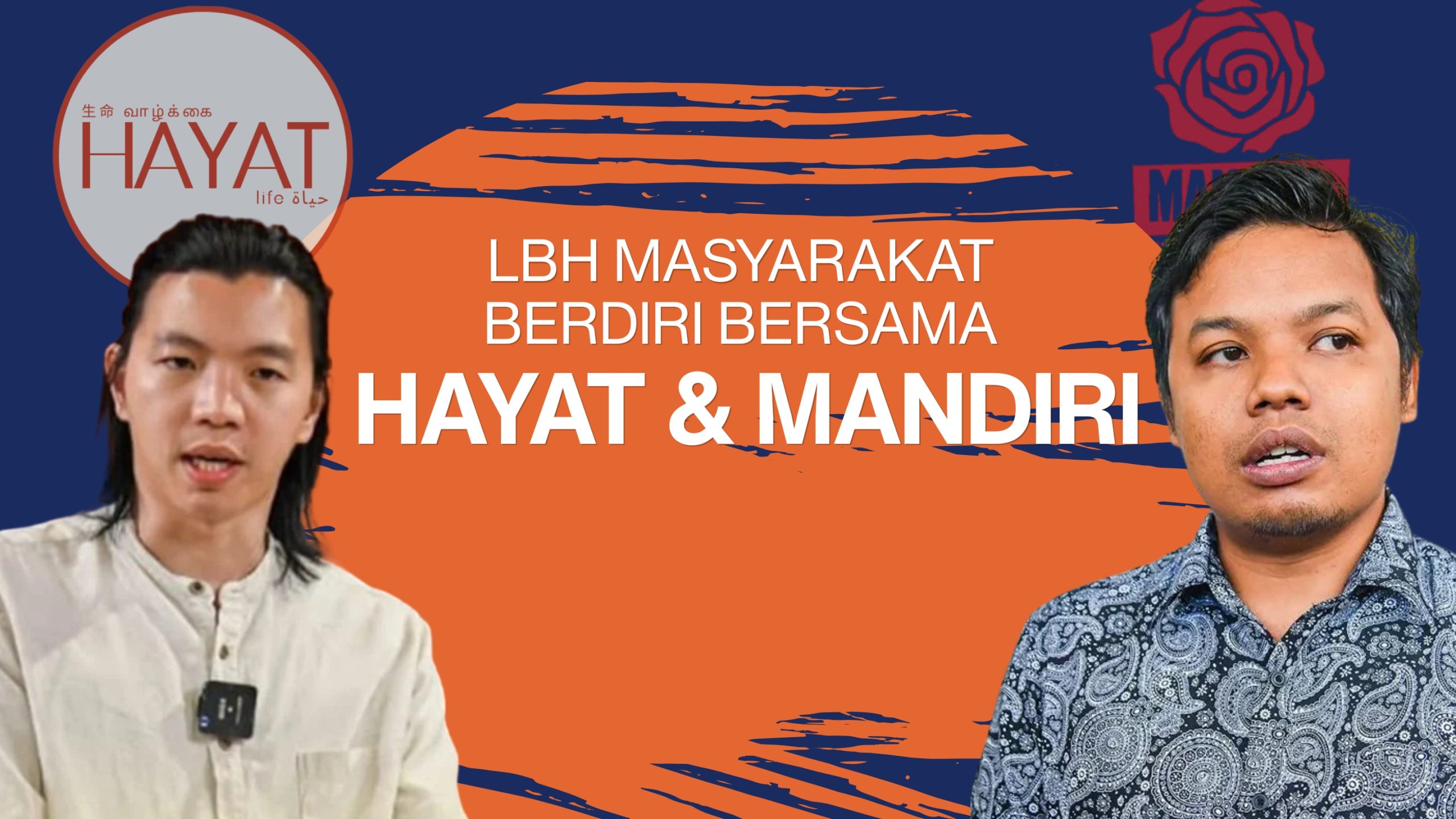
LBH Masyarakat Berdiri Bersama Hayat dan Mandiri

Lembaga Bantuan Hukum Masyarakat (LBHM) berdiri bersama dua organisasi partner kami di Malaysia, Hayat dan Mandiri, yang saat ini sedang menghadapi serangkaian upaya represif dari pemerintah Malaysia atas kerja-kerja hak asasi manusia (HAM) yang mereka kerjakan.

Pada tanggal 10 September 2026, Polis Diraja Malaysia memblokir rekening organisasi Hayat dan Mandiri. Bersamaan dengan dua rekening itu, pemerintah juga memblokir rekening pemimpin dari dua organisasi itu, yakni Dobby Chew dan Amir Hadi. Dua pemimpin organisasi ini juga mengalami pencekalan sehingga tidak bisa meninggalkan Malaysia.

Akibat pemblokiran rekening ini, kedua organisasi kesulitan untuk menjalankan pekerjaan-pekerjaan yang sudah tertuang dalam visi-misi lembaga. Pemblokiran ini membuat kedua organisasi tidak bisa merealisasikan hak para pekerjanya. Pemblokiran atas rekening pribadi juga membuat Dobby Chew dan Amir Hadi kesulitan untuk memenuhi kebutuhan sehari-hari mereka.

Berdasarkan informasi yang diterima, tidak ada proses pemeriksaan yang jelas atas dua organisasi ini sebelum akun bank mereka diblokir. Mereka tidak mendapatkan klarifikasi tertulis mengapa akun bank mereka diblokir atau kejahatan apa yang terbukti sehingga terjadi pemblokiran rekening dan pencekalan.

Padahal, berdasarkan pengalaman LBHM, kami bisa memberikan kesaksian bahwa kerja-kerja dua organisasi ini memang betul memperjuangkan HAM kelompok rentan dan mencegah penyempitan ruang sipil di Malaysia. Bersama dengan Hayat, LBHM melakukan pendataan terpidana-terpidana mati berkewarganegaraan Indonesia di Malaysia sejak tahun 2024. Lewat penghapusan hukuman mati dan kebijakan resentencing, lebih dari 100 warga negara Indonesia (WNI) yang dihukum mati mendapatkan komutasi hukuman dari hukuman mati menjadi hukuman penjara. Namun, perubahan hukuman ini tidak serta-merta membuat mereka bisa mengakses hak-hak fundamentalnya, seperti hak atas keadilan dan hak atas kesehatan.

Berangkat dari kondisi ini, LBHM dan Hayat melakukan pendampingan kepada para terpidana. Pendampingan ini mencakup pertemuan rutin dengan para terpidana di dalam lembaga pemasyarakatan, menghubungi para terpidana dengan keluarga mereka, melakukan pertemuan-pertemuan dengan pemangku kepentingan di dua negara untuk memperjuangkan pemindahan narapidana. Dari proses ini, kami belajar bahwa para terpidana dalam kasus narkotika ini, yang umumnya adalah perempuan, juga adalah korban perdagangan manusia (human trafficking) dengan elemen pemaksaan kejahatan. Kasus-kasus mereka menunjukkan bahwa mereka menjadi kurir narkotika karena pemaksaan, ancaman kekerasan, atau berada dalam relasi kuasa yang akhirnya menyebabkan mereka mau tidak mau terlibat dalam tindak pidana narkotika.

Hasil kerja kolaborasi internasional antara masyarakat sipil ini membuahkan hasil yang positif. Pada bulan Maret lalu, kami berhasil membawa pulang salah satu klien kami bernama Asih yang sudah hidup di berbagai penjara di Malaysia selama kurang lebih 15 tahun kembali ke Indonesia. Asih berasal dari keluarga dengan status ekonomi rentan, di mana orang tua dan anak-anaknya menyambung hidup dengan pekerjaan-pekerjaan informal. Pendampingan yang dilakukan lintas negara ini mampu mengantarkan Asih kembali ke rumahnya bersama dengan keluarganya.

Pekerjaan pendampingan kasus-kasus kebebasan berekspresi yang LBHM lakukan di Jakarta juga mendapatkan bantuan dari Mandiri. Sejak penangkapan besar-besaran orang-orang muda pasca demonstrasi Agustus 2025, Mandiri berkali-kali melakukan aksi solidaritas untuk mendorong pemerintah Indonesia tidak melakukan kriminalisasi atas kebebasan berpendapat dan mendorong pemenuhan hak-hak tersangka/terdakwa. 

Berkaca dari pengalaman-pengalaman kerja bersama ini, LBHM melihat bahwa tuduhan kejahatan yang dilayangkan kepada dua organisasi ini tidak berdasar. Lebih jauh, pemblokiran dan pencekalan tanpa proses peradilan yang imparsial dan adil adalah bentuk represi atas hak asasi universal yang sudah tertuang dalam Deklarasi Universal Hak Asasi Manusia. Apa yang terjadi pada Hayat dan Mandiri adalah pelanggaran atas hak atas peradilan yang adil (Pasal 10), hak bergerak (Pasal 13), kebebasan berpikir (Pasal 19), dan kebebasan berkumpul (Pasal 20). Represi ini juga memperburuk tren perampasan ruang sipil bagi Pembela HAM (Human Rights Defenders) di kawasan Asia Tenggara.

Kondisi pemblokiran rekening dan pencekalan pada pemimpin organisasi masyarakat sipil ini juga menemukan paralelnya di Indonesia. Baru bulan lalu, publik di Indonesia dihebohkan dengan pemblokiran rekening Aliansi Masyarakat Pati Bersatu beberapa hari sebelum aksi demonstrasi mereka di Jakarta berjalan. Pemblokiran dilakukan atas permintaan aparat penegak hukum tanpa adanya putusan pengadilan yang mengikat.

Pemblokiran dan pencekalan yang dilakukan tanpa prosedur pemeriksaan hukum yang transparan, adil, dan imparsial adalah cara kotor untuk membungkam Pembela HAM. Pemerintah negara mana pun harus menyadari bahwa kerja-kerja membela HAM dan merawat ruang sipil adalah pekerjaan yang esensial untuk memastikan demokrasi tetap berjalan.

Jakarta, 16 September 2026

Narahubung: Albert Wirya (0852-1524-1116)


English version

LBHM Stands in Solidarity with Hayat and Mandiri

Community Legal Aid Institute (Lembaga Bantuan Hukum Masyarakat – LBHM) stands in solidarity with our two partner organisations in Malaysia, Hayat and Mandiri, which are currently facing a series of repressive actions by the Malaysian government over their human rights work.

On September 10, 2026, Polis Diraja Malaysia froze the bank accounts of both Hayat and Mandiri. Alongside these organisational accounts, the government also froze the personal bank accounts of the leaders of both organisations, Dobby Chew and Amir Hadi. Furthermore, both leaders have been subjected to a travel ban, preventing them from leaving Malaysia.

Due to the freezing of these accounts, both organisations are struggling to carry out the work outlined in their institutional visions and missions. This blockade has left them unable to pay the wages of their staff members. The freezing of their personal accounts has also made it difficult for Dobby Chew and Amir Hadi to meet their daily basic needs.

Based on the information received, there was no clear investigation process prior to the freezing of their bank accounts. They received no written clarification explaining why their accounts were frozen or what specific offences they allegedly committed to warrant such financial blockades and travel bans.

Drawing from LBHM’s direct experience, we can testify that the work of these two organisations genuinely champions the human rights of vulnerable groups and works to prevent the shrinking of civic space in Malaysia. Since 2024, LBHM has collaborated with Hayat to document Indonesian death row prisoners in Malaysia. Through the abolition of the mandatory death penalty and the introduction of resentencing policies, more than 100 Indonesian citizens (WNI) previously facing execution have had their sentences commuted from death to imprisonment. However, this sentence reduction does not automatically grant them access to their fundamental rights, such as the right to justice and the right to health.

Building upon this situation, LBHM and Hayat have provided legal accompaniment and support to these prisoners. This assistance includes regular prison visits, facilitating communication between prisoners and their families, and holding meetings with stakeholders in both countries to advocate for prisoner transfers. Through this process, we have learned that many drug convicts, particularly women, are also victims of human trafficking with elements of forced criminality. Their cases demonstrate that they became drug couriers due to coercion, threats of violence, or unequal power dynamics that ultimately forced them to become involved in drug offences.

The results of this international civil society collaboration have yielded positive outcomes. Last March, we successfully brought home one of our clients, Asih, who had spent approximately 15 years in various Malaysian prisons, and reunited her with her family in Indonesia. Asih comes from a family of vulnerable economic status, where her parents and children rely on informal jobs to survive. This cross-border advocacy and assistance successfully brought Asih back home to her family.

The case assistance that LBHM carries out in handling freedom of expression cases in Jakarta has also received support from Mandiri. Following the mass arrests of young people in the wake of the August 2025 demonstrations, Mandiri repeatedly organised solidarity actions to urge the Indonesian government to halt the criminalisation of freedom of expression and to advocate for the fulfilment of the rights of suspects and defendants.

Reflecting on these collaborative working experiences, LBHM views the allegations levelled against these two organisations as baseless. Furthermore, asset freezes and travel bans carried out without a fair and impartial judicial process constitute a form of repression against universal human rights as enshrined in the Universal Declaration of Human Rights. What is happening to Hayat and Mandiri is a violation of the right to a fair trial (Article 10), the right to freedom of movement (Article 13), freedom of thought (Article 19), and freedom of assembly (Article 20). This repression also worsens the concerning trend of shrinking civic space for Human Rights Defenders (HRDs) across the Southeast Asian region.

The freezing of bank accounts and travel bans targeting civil society leaders also finds a parallel in Indonesia. Just last month, the Indonesian public was shocked by the freezing of the bank accounts of the Aliansi Masyarakat Pati Bersatu, just days before their planned demonstration in Jakarta. The blockade was executed at the request of law enforcement agencies without any binding court order.

Asset freezes and travel bans executed without transparent, fair, and impartial legal procedures are dirty tactics designed to silence Human Rights Defenders. Governments everywhere must recognise that defending human rights and safeguarding civic space are essential endeavours to ensure that democracy continues to thrive.

Jakarta, 16th September 2026

Contact Person: Albert Wirya (0852-1524-1116)